Posts

Showing posts with the label HPLC

Methods for Prolonging the Column Lifetime

Image
  Your column may suffer from short working life, which not only causes rising costs, but also impacts the experimental results. Today, we invite Welch engineers to answer questions about how to prolong the column life. 👇👇👇👇👇 1) The most likely reason is that the sample components are adsorbed at the front of the column. It may precipitate due to the low solubility of the sample in the mobile phase, strong adsorption or a weak and unpredictable chemical reaction between the sample itself and the surface of packing materials. If pH of the sample solution is near the maximum tolerance of column while injection volume is large(inner diameter is 4.6 mm and the injection volume of sample is more than 50 ul), it will have a greater impact on the packing materials of the column head, which is usually accompanied by increased column pressure. Solution: select the appropriate sample...

How to Collect Laboratory Waste Liquid Safely?

Image
In the field of chromatographic analysis, we often use HPLC, UPLC, flow injection and other instruments with mobile phase, which will produce a variety of hazardous waste liquid. How to collect waste liquid in a reasonable way is very important to ensure laboratory safety and personnel health. In order to solve this problem, Welch has launched a series of products about safety collection in laboratory as following. Connect-type safety collection device This device can be connected with HPLC, UPLC, flow injection and other mobile phase instruments to directly discharge the hazardous waste liquid generated during analysis to a sealed container. The special feature is that the organic steam filter can remove the pressure inside the container and filter the harmful volatiles. Different types of liquid level indicators are provided inside the container to remind the analyst to deal with the waste liquid in time. The standard version of this device includes one 20L certifi...

Addressing the Problem of Vaccine Purification

Image
Vaccines, as a hot word in 2020, will be frequently referred for a long time in the future. Vaccination is the most economical and effective public health intervention for the prevention and control of infectious diseases. It is also an effective means for families to reduce the incidence of diseases among members and the cost of medical treatment. Production time of vaccines vary and it may take 22 months to produce a single batch for some vaccines. The development of a vaccine is a long and complex process with high cost. In order to ensure the safety and effectiveness of the vaccine and reduce the side effects of the vaccine and immune interference of impurities, it is necessary to effectively separate and purify the vaccine, to remove other impurities in the cell culture medium, and to improve the content and purity of the effective components of the vaccine. This passage briefly introduces the current methods of vaccine se...

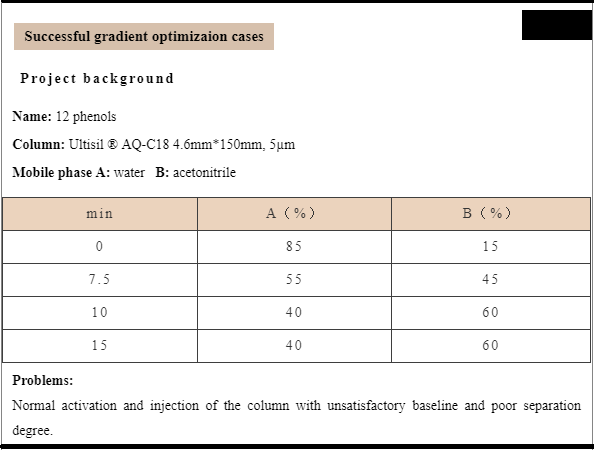
Gradient Optimization of Liquid Chromatography

Image
In liquid chromatography, for samples with complex components, it is often difficult to use a single chromatographic system to achieve ideal separation effect. Either the separation time is too long, or the separation degree is too poor.  In this case, gradient elution can shorten the analysis time and improve the separation effect. Let's see an example of gradient optimization and experience how it influences the separation effect. Precautions of establishing gradient method: 1. Try to develop methods on instruments that can test the project for a long time. 2. It is necessary to understand the property of the system so as to avoid problems that it cannot be reproduced after changing the instrument system. 3. Two basic facts of the system should be known: gradient lag volume and proportional accuracy.  These two data can be obtained in the same experiment: refer to the Experiment of Gradient Error in JJG 705 2014 Liquid Chromatogra...